
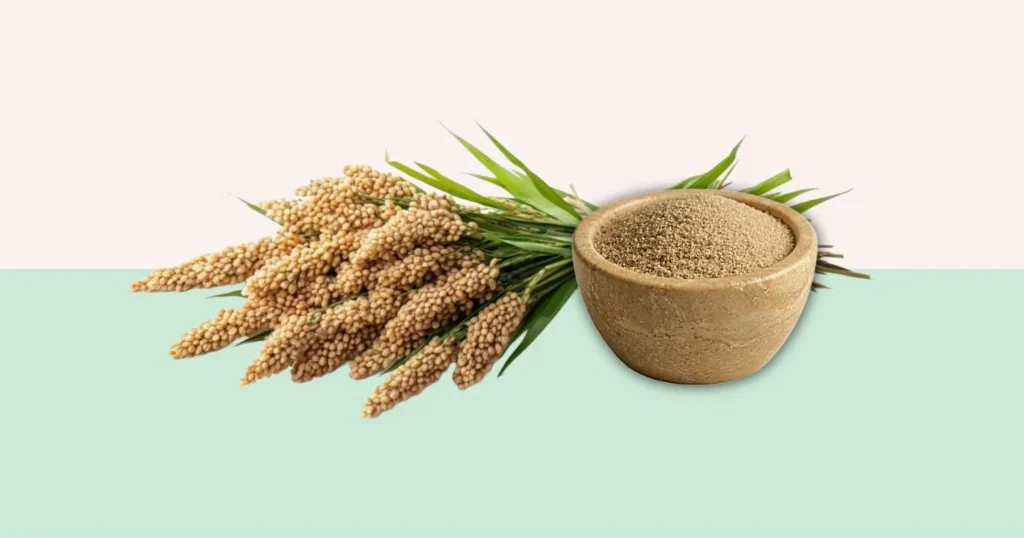
Walk into a grocery store the week before Navratri and the same grain shows up under half a dozen labels. Sama, samak, samvat, sanwa, vrat ke chawal. In Uttarakhand’s hills, it is jhangora. All of them are barnyard millet, a tiny seed with about 12.6 g of fibre and 307 kcal per 100 g, which is a big part of why it fills you up on a fast day.
Since Sharad Navratri is soon approaching, beginning from 11 to 19 October this year, barnyard millet remains one of the most vrat-friendly grains. So, let’s see how samak satisfies your stomach until the fast ends. Here is what you are buying and how much to eat.
What is Barnyard Millet
Barnyard millet (Samak rice ) is Indian (Echinochloa frumentacea), a short-season crop that grows on marginal land where rice struggles. Farmers have grown it for centuries across India, Nepal, and Pakistan.
It has no botanical link to rice. When the millet is hulled, it looks like broken rice. You can cook it the same way. It easily replaces rice on the fasting plate. Hence, the Hindi name ‘vrat ke chawal’ means rice for fasting.
If you are looking for a nutrition-rich plate on Navratri, try Yakulaas’s organic barnyard millet grown through traditional farming methods in the Uttarakhand hills.
Names Across India
| Region or Language | Name |
|---|---|
| Hindi, fasting use | Sama, samak, samvat, vrat ke chawal |
| Hindi | Sanwa |
| Uttarakhand | Jhangora |
| Marathi | Bhagar |
| Gujarati | Moraiyo |
| Tamil | Kuthiraivali |
| Kannada and Telugu | Oodalu, udalu |
Reading the Label: Some sellers list little millet as “sama” (samai in Tamil). It is a different grain. If the pack does not say barnyard millet, ask before you buy.*
Samak Rice Nutrition per 100 g
| Per 100g Raw | Barnyard Millet | White Rice |
|---|---|---|
| Calories | 307 kcal | 345 kcal |
| Protein | 11.2 g | 11.8 g |
| Dietary fibre | 12.6 g | 0.2 g |
| Calcium | 20 mg | 10 mg |
| Iron | about 5 mg | 0.7 mg |
| Glycaemic index | about 50 | about 73 |
- Fibre-first:
Fibre is where samak leaves rice far behind. These numbers above describe the whole grain, though. Heavily polished samak loses some of the bran, and the fibre goes with it.
- Iron and Calcium:
Iron is roughly seven times higher in baynard millet than in white rice. Meanwhile, calcium is nearly double, around 22 mg. Try squeezing lemon on the cooked millet to help the body absorb the iron.
Samak Rice in Vrat
Many families treat samak as a fasting grain and not as a cereal. That is a traditional classification, not a nutritional rule, and practice differs from home to home. Follow your own household’s custom.
Foxtail, kodo, little millet, bajra, jowar, and ragi are usually avoided during vrat. Kuttu, singhara, and rajgira are the other common fasting foods, and none of them is a millet.
How Much Samak Rice to Eat
Portion per Meal
A reasonable serving is about 40 to 50 g of dry grain, roughly a quarter cup, which cooks to a full bowl. Over nine days, one or two such meals a day is plenty.
Easing in the Fibre
At 12.6 g of fibre per 100 g, a big bowl on day one can upset a stomach used to refined food. Start smaller, drink water through the day, and increase gradually.
Cooking Ratio
Rinse well, then cook one part samak to two parts water for 15 to 18 minutes and let it rest covered for five. Soaking is optional.
Building the Plate
Pair it with curd, peanuts, paneer, or vegetables for protein. Kheer is lovely, but go easy on the sugar. If you have diabetes or are pregnant, check your fasting plan with a doctor first.
Choosing Samak Rice
Unpolished vs Polished
Unpolished grain keeps its bran, fibre, and minerals. Polished grain looks whiter and cooks softer. Look for the word on the pack.
Origin
Jhangora from Garhwal comes from a hill farming tradition. Yakulaas lists barnyard millet among its Himalayan grains and says it sources from women farmers in Garhwal.
Freshness
A recent packing date and a clean, mild smell matter more than any label claim. Store the grain airtight, away from moisture.
Before the Fast Begins
Pick the right grain, cook it simply and build your meal around it. Samak does the heavy lifting on fibre and iron, and curd or peanuts cover the protein.
Looking for Himalayan Millets this Navratri?
Explore Yakulaas’s barnyard millet, which are unpolished and gluten-free, produced through Barahnaja farming. They are ideal for your vrat days!