
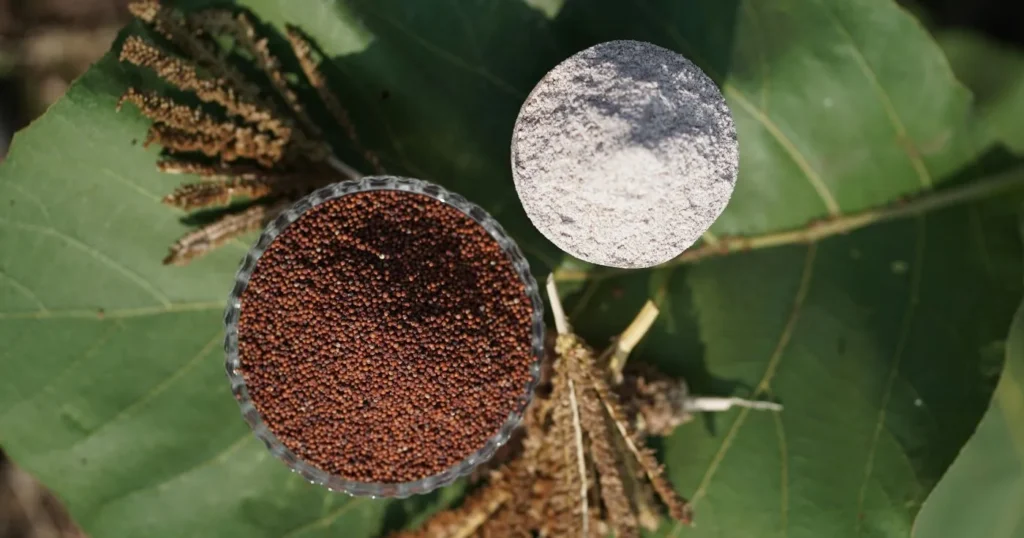
In Garhwal, a mandua roti with a spoonful of ghee once carried a farmer through a full day on the terraces. In Karnataka, ragi mudde fills the same role, and across India, ragi kanji is many children’s first solid food. The grain behind all of it holds about 344 mg of calcium per 100 g, far more than rice or wheat, and it grows in poor soil with very little water.
This blog reveals what ragi is, what it offers and how to cook it well. Know everything about this grain.
What is Ragi?
Ragi (Eleusine coracana) is finger millet, a small reddish-brown grain called ‘nachni’ in Hindi and ‘mandua’ in Garhwal and Kumaon. It began in the highlands of East Africa and reached India thousands of years ago. Karnataka grows more than half of India’s crop, with Tamil Nadu, Andhra Pradesh and the Uttarakhand hills following.
It tolerates erratic rain and thin soil, which is why dryland and hill farmers kept it going when other crops failed.
Ragi Nutrition per 100 g
| Nutrient | Amount |
|---|---|
| Calories | about 330 kcal |
| Protein | 7 g |
| Carbohydrates | 72 g |
| Dietary fibre | about 11 g |
| Calcium | 344 mg |
| Iron | 3.9 mg |
| Magnesium | 137 mg |
Health Benefits of Ragi
1. Calcium and Bones
Calcium is ragi’s headline number. At 344 mg per 100 g it sits well above rice and wheat, which helps vegetarians and anyone who eats little dairy. Muscles and nerves draw on that calcium every day, not just bones.
2. Fibre and Fullness
Ragi keeps its bran, so it digests slowly and keeps you full for longer. That is why it shows up in weight management plans, though portion size matters more than any single grain.
3. Blood Sugar Response
Fibre slows how quickly carbohydrates reach the blood. Ragi’s glycaemic effect is moderate and shifts with preparation, so a whole-grain porridge behaves differently from refined baked goods. Pair it with dal, vegetables or curd. If you have diabetes, plan portions with your doctor.
4. Women’s Health
Searches for ragi benefits for women keep rising, and the reason is practical. Calcium needs to climb during pregnancy and breastfeeding, and bone density falls with age. Ragi also supplies plant iron, and sprouted green ragi is a traditional food for new mothers in parts of India. It supports a balanced diet but does not treat anaemia or osteoporosis.
5. Gluten-Free Grain
Ragi is naturally gluten-free. Anyone with coeliac disease should still check that the pack was not processed alongside wheat.
Ragi vs Rice vs Wheat
| Feature | Ragi | Rice | Wheat |
|---|---|---|---|
| Calcium per 100 g | 344 mg | 23 mg | 41 mg |
| Fibre | Higher, bran intact | Lower once polished | Lower once refined |
| Gluten | No | No | Yes |
You do not have to replace any of your staple meals. Just swapping one grain a day can provide you a mix of nutrients.
How to Eat Ragi?
A sensible daily amount is 30 to 50 g of flour, roughly one bowl of porridge or two rotis.
- Ragi Porridge
Whisk the flour into cold water first to avoid lumps, then cook on low heat for 8 to 10 minutes until it thickens and loses its raw smell. Sweeten with jaggery or add salt and buttermilk for a savoury version. For Ladoo’s, roast the flour in ghee and bind it with jaggery.
- Ragi Rotis
Ragi has no gluten, so a pure ragi dough crumbles. Many Uttarakhand homes mix two parts ragi flour to one part wheat flour, knead with warm water and finish with ghee. For dosas, add a little rice flour and curd.
- Fermented Batters
Fermenting ragi in idli or dosa batter can make it easier to digest and may help the body absorb its minerals. It is also the easiest way to bring ragi into a family breakfast without changing the routine.
Choosing Ragi Flour
Most ragi flour on shelves is roller-milled, which heats the grain and strips some bran. Stone-ground flour is coarser, smells nuttier and retains more fibre.
- Look for a named origin
- The recent packing date
- A sweet, earthy smell, not a musty one.
Yakulaas, for example, sells stone-ground ragi flour and says its mandua comes from women farmers in Garhwal, grown by the Barahnaja method without fertilisers.
Who Should Avoid Eating Ragi (Finger Millet) Daily?
Ragi contains oxalates, so people with kidney stones should check with a doctor first. Millets can also affect iodine uptake, so anyone with a thyroid condition should ask for guidance. If high-fibre food is new to you, start small and drink plenty of water. If you prefer to grind at home, whole mandua grain works too.
Conclusion
Ragi rewards consistency more than a one-time fancy recipe. Begin with one serving a day, choose whole or stone-ground grain, and eat it along with protein and vegetables. Your small, regular changes to the plate can add up to your health over the years.
Ready to try it? Explore Yakulaas’s Himalayan grains and ragi flour and cook your first batch this week.